Posts

Towards Zero Waste: Workshops now Accepted

Image
Bituen is currently accepting requests for workshops & trainings for  developing positive attitude towards sustainable living. The workshop covers why we need to address waste management at the individual and home levels, with the following topics: What to do with biodegradable wastes. Container-gardening Paper, fabric, plastic & can upcycling. Sustainable lifestyle. Please call (63)-2-9941372 or email bituen.org@gmail.com for inquiry or details. Images shown are actual projects from waste materials tackled during workshops.
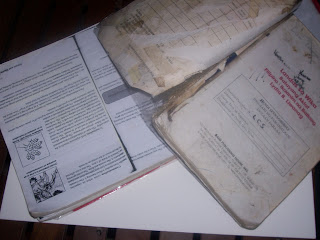
Who Says

Image
"...the gargantuan challenge for Education Secretary Armin Luistro in realizing the value of the K to 12 Program includes ... above all, developing a culture of reading in Filipino children. There’s the rub. [It] might take 100 years or so..." Christopher Ryan Maboloc, The future of our children, Philippine Daily Inquirer Saturday, June 30th, 2012." The culture of reading is the biggest problem in Philippine education. This is compounded by the quality of books provided to public and even private school pupils which is abominable , to say the least... If children were provided books at all. In the latest  Reading Caravan conducted at Pideg, Elementary School in Pugo, La Union, all children in the school in June 5, 2013 (about 200 pupils in all), received their own books for their own reading consumption. The actual photos provide an insight as to how the children feel about reading decent books. We do not need to spell the ob...

Sustainable Waste Management at Individual Level

Image
 Aside  from increased literacy, Bituen have embarked on another critical issue in the country which is sustainable waste management through the publication of 3Rs of Fun in Waste currently available at  Amazon  and  Etsy . The book, although still in its early release (October 2012) has sold more than a thousand copies and has been generating awareness through  Inquirer  and  Philippine Star  online and offline. In a recent No Impact program of the Asian Development Bank through the assistance of Ms. Carolyn Cabrera and Ms. Rhea Reburiano of ADB, Dir. Emy Aguinaldo and Ms. Racquel Reyes of the National Solid Waste Management Commission secretariat, as well as the other officers of NSWMC and DENR, the book and the projects in the book were featured. DENR officers, Ms. Reyes (in white) and Ms. Reburiano (in black) at ADB No impact Week . Bituen hopes that through these exposures, waste management at individual level bec...

December 16 & 30 Reading Caravan @ San Vicente Magsingal & San Pedro, Vigan

Image
The  December 16 Reading Caravan was conducted in San Vicente, Magsingal. The books were donated by Read Pilipinas , Ms. Carlotta Steven Fealy, Ms. Violet Whim Alderleaf, and Peace Corp. Support was also extended by the Office of Senator Bongbong Marcos . The Caravan was conducted with the help of Dr. Estrella Oliver Soria and her team of San Vicente Professionals' Association. The children are from daycare to Grade Six. In this program, we have introduced the book exchange wherein a volunteer coordinator will meet the children regularly to have their books swapped to maximize impact. We hope to partner again with the Association for more projects. In December 30, the Reading Caravan was conducted in cooperation with the Saint Paul College of Ilocos Sur H.S. Batch '88 at San Pedro, Vigan City. It is said that San Pedro is a relocation site of marginalized urban poor in the country's World Heritage Site - Vigan city proper. The books have been prov...

Reading Caravan Sept. 13, 2012

Image
Badoc, Ilocos Norte  - (First Leg of the National Tour from North to South) Badoc South Central School is the most populated school of the town with about 740 enrollees. Many come from marginalized families. During the reading session, some Grade 1 and 2 pupils, all from marginalized families, intuitively point on the letters and count with their other set of fingers to recall what the letters are in front of them. Some of them cannot read. In the case of this writer, out of 41 pupils, 6 pretended to be able to read, murmuring non-syllables. Incidentally, only 2 Grade 1 pupils out of 20 were noted to have difficulty reading. They already use books in vernacular and this could have helped because among the Grade 2 pupils, 4 cannot (out of 21 pupils). When asked why he cannot read, one pupil answered he have no books to read. Probably, he meant no interesting books to read. Public school pupils are provided with black-ink, dog-eared, disin...